
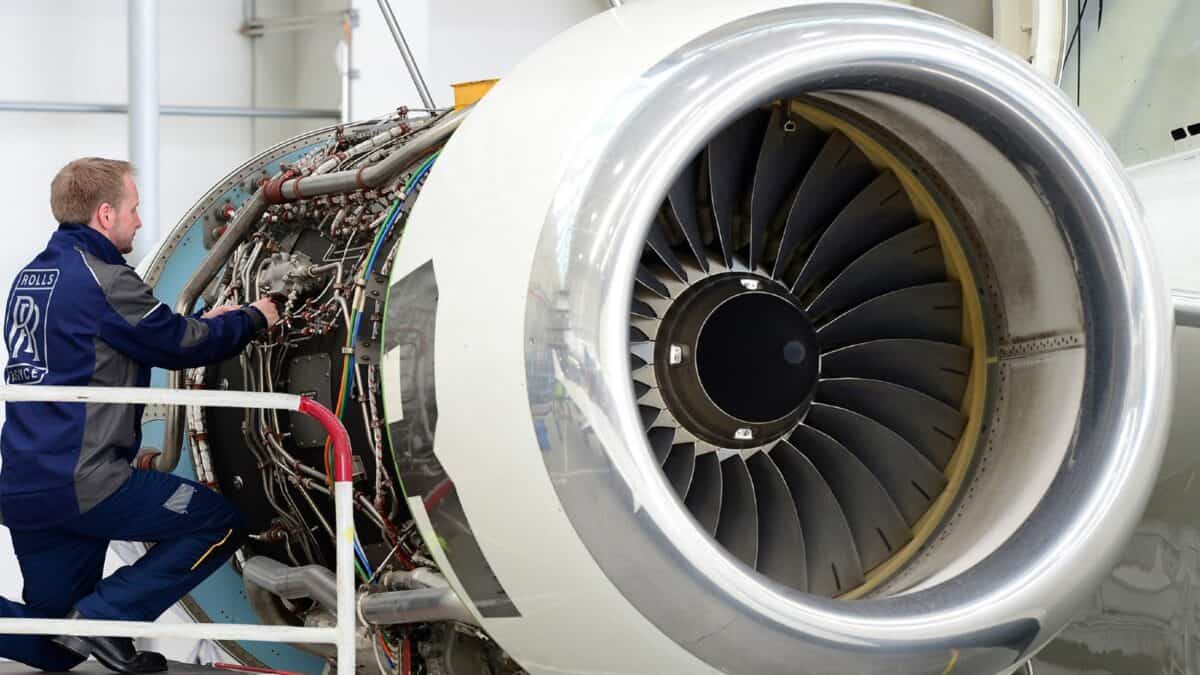
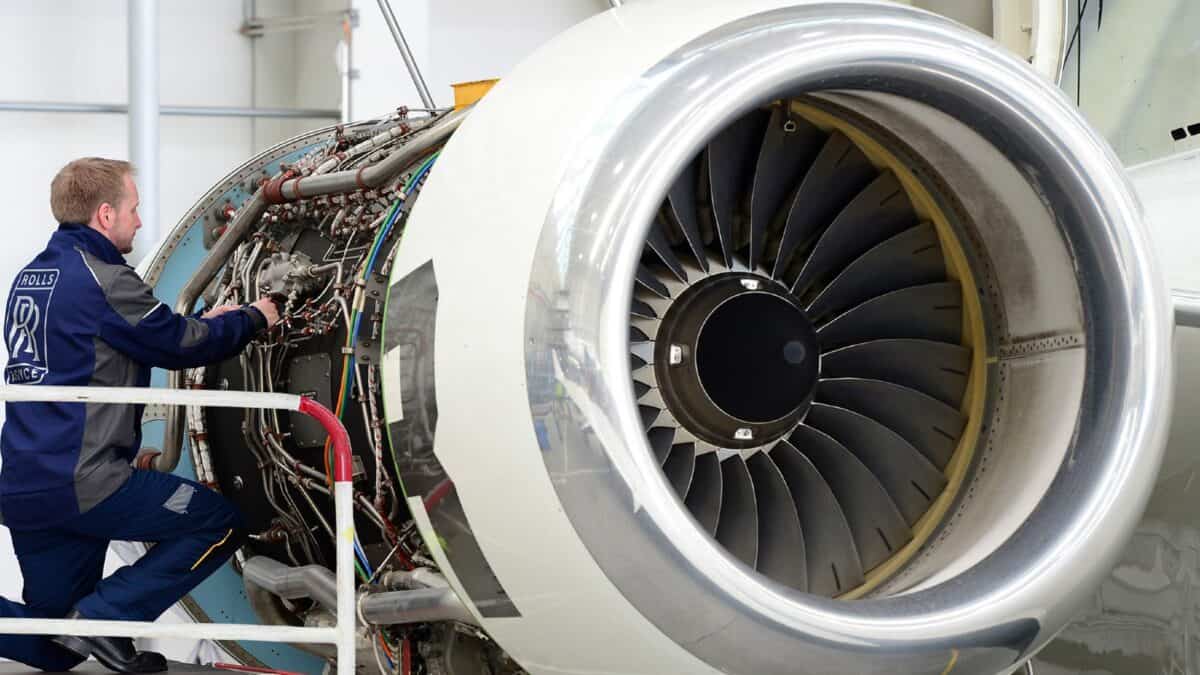
Image source: Rolls-Royce plc
It’s no secret Rolls Royce (LSE:RR.) shares dominated FTSE 100 indexrising by more than 1,200% in the past three years.
In 2026, this upward trajectory continues. Even in the past five weeks, Rolls-Royce has made another 10% gain, turning a simple £500 investment into £550. But with a market capitalization of £115bn and a forward price-earnings ratio of 39.4, can this FTSE stock really soar?
Here’s what the experts say.
Exceptional quality at a high price
There are several factors that have caused Rolls-Royce shares to rise in the past few weeks. Most notable are the impressive full-year results for 2025, along with the announcement that management has implemented a new £2.5 billion share buyback plan.
Underlying operating profits last year rose by a further 40.5% from £2,464m to £3,462m in 2025, thanks to a combination of increased revenues and wider margins.
But this is the free cash flow number that most analysts focus on. After all, excess cash generated from operations is what a company needs to shore up its leveraged balance sheet. As with earnings, free cash flow was also front-loaded from £2,425m to £3,270m.
Can this increase in sales, profits and cash flows continue into 2026? Looking at the guidance, the answer appears to be yes.
Rolls-Royce now expects to achieve adjusted operating profits of between £4 and £4.2 billion, with free cash flow of between £3.6 and £3.8 billion. This means the company is on track to meet its previous 2028 goals two years ahead of schedule – an extraordinary acceleration in the company’s turnaround timeline.
With that in mind, it’s not surprising to see Rolls-Royce shares continue to outperform the market and command a pricey high valuation.
Is this then a no-brainer for UK growth investors?
What are you watching?
Even when stocks trade at premium valuations, investors can still make impressive gains over the long term. However, it increases the risks of purchasing stocks. Looking under the hood, there are some growing headwinds that could cause the company’s current impressive growth to gradually slow down.
Over the past few years, its civil aviation segment has enjoyed strong tailwinds for post-pandemic recovery through longer flight hours, which in turn has increased demand for the group’s high-margin after-sales services.
However, the “catch-up” phase of the recovery is now complete. While global flight hours are still expected to increase steadily in the future, the pace has already slowed significantly.
Another thing to watch carefully is the risk of supply chain disruption. Management has already warned that 2026 could see additional cash costs of between £150m and £200m as a result. However, if component shortages worsen as a result of heightened geopolitical and trade tensions, this impact could be worse than expected, causing Rolls-Royce to fail to meet its 2026 targets.
So where does that leave investors? Betting against Rolls-Royce stock has proven to be a costly mistake in the past few years. But as impressive as the work has become, the evaluation leaves little room for error. Although leadership has demonstrated exceptional skill in operational execution, external disruptions can derail the business.
For this reason I think investors may want to consider looking elsewhere until a more attractive entry point emerges. Fortunately, they are spoiled for choice.