

The domain of investment group BG Wealth Sharing, a $150 million crypto Ponzi scheme, has been seized by law enforcement days after users were allegedly defrauded.
Onchain investigator ZachXBT said Tuesday that “illicit actors” linked to the group attempted to launder more than $92 million in cryptocurrencies between April 27 and Sunday, but he helped lead an initiative that froze more than $41 million, working alongside Tether, Binance, OKX and US law enforcement agencies.
He also said the scheme was likely responsible for more than $150 million in losses, given that it has been operating since 2025 and “thousands of victim exchange withdrawals have been identified.”
“Although these Chinese investment scams are obvious to most people, they intentionally target unsophisticated retail investors via social media,” ZachXBT added. “From reading the victims’ posts, it appears that many of them are still in denial about being scammed.”
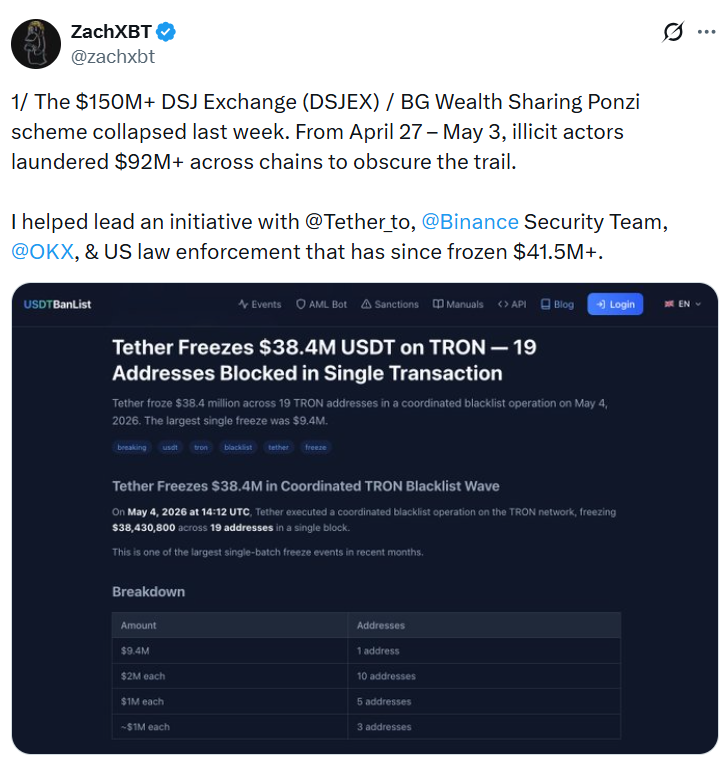
source: ZackXBT
The US Federal Bureau of Investigation reported in April that American victims lost $21 billion to cybercrime last year, with cryptocurrency investment scams accounting for a large share of the losses.
The BG Wealth Sharing domain has been seized by US law enforcement
As of Wednesday, BG Wealth Sharing’s website displays notice that it has been seized by US law enforcement as part of a joint operation between Operation Level Up and Scam Center Strike Force.
Several regulators have warned that BG Wealth Sharing is an unlicensed entity and have advised caution since 2025. In April, the Central Bank of Samoa said it was an investment scam and advised investors to avoid the company.
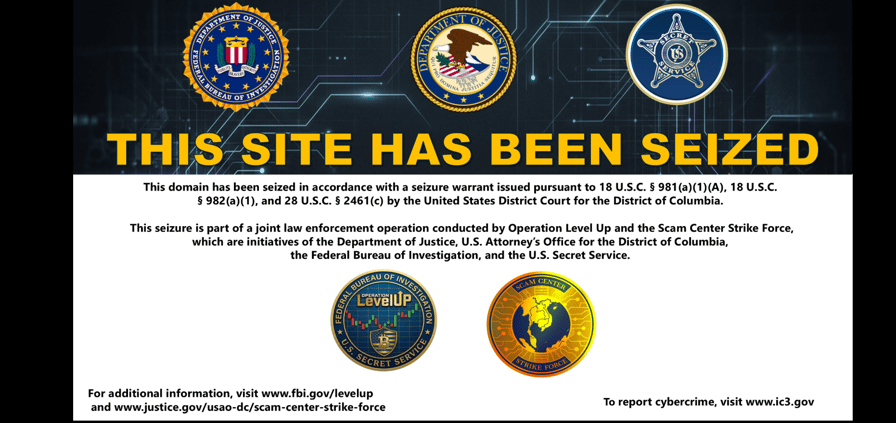
US authorities seized a domain associated with BG Wealth Sharing. source: BG Wealth Sharing
According to authorities, BG Wealth Sharing claimed to provide guidance on cryptocurrency trading, advertised heavily on social media and offered “daily earning opportunities,” referral commissions, rating-based bonuses, and a daily return ranging from 1.3% to 2.6%.
Related to: Google Cloud points to a cryptocurrency malware campaign linked to North Korea
Users say it’s a final rug pull before going offline
Before BG Wealth Sharing went out of business, alleged CEO Stephen Baird told users in a video address on Saturday that DSJ Exchange was on the cusp of an initial public offering and that a 12% tax on account balances was required as part of the regulatory process.

BG Wealth Sharing CEO Stephen Baird told users that a 12% tax on account balances is required as part of the IPO process. source: ZackXBT
By Sunday, users on social media warned that the whole scheme was a pushover. On Monday, the Washington State Department of Financial Institutions issued a similar warning.
In an update to its previous post about BG Wealth Sharing, the regulator said it had received complaints from investors and warned that it was likely a scam.
“A company that requires an investor to deposit additional external funds in order to withdraw their investment is very likely running an advance fee scam.”
magazine: DeFi’s billion-dollar secret: The insiders responsible for the hacks
Regulators and law enforcement agencies moved quickly to secure the digital assets once suspicious transactions were identified on the blockchain. Investigators believe the funds may be connected to a broader network of wallets used to move and potentially obscure investor money. By freezing the assets, authorities aim to prevent further transfers while they trace the origin and flow of the funds.
Preliminary findings suggest that BG Wealth Sharing may have operated in a manner similar to a Ponzi-style scheme, where returns for earlier participants were funded using deposits from new users. As scrutiny increased, withdrawals reportedly slowed, raising concerns among investors and prompting formal complaints.
Officials have stated that the investigation is still ongoing, and additional actions may follow depending on the findings. Victims have been advised to report their cases and provide documentation to assist authorities. The freeze marks a significant step toward potential recovery efforts, although the final outcome will depend on legal proceedings and asset tracing results.